The Definitive Masterclass on Quinceañera Flowers and Celebration Styling
Flowers El Ranchito Expert Advice
The Definitive Masterclass on Quinceañera Flowers and Celebration Styling
A quinceañera is far more than a birthday celebration. It is a milestone rooted in family, tradition, identity, and the joyful transition from childhood to young womanhood. Every element of the event should reflect that significance, and few details shape the atmosphere as powerfully as flowers and styling. From the moment guests arrive to the final dance of the night, floral design helps define the tone, color story, elegance, and emotional impact of the celebration.
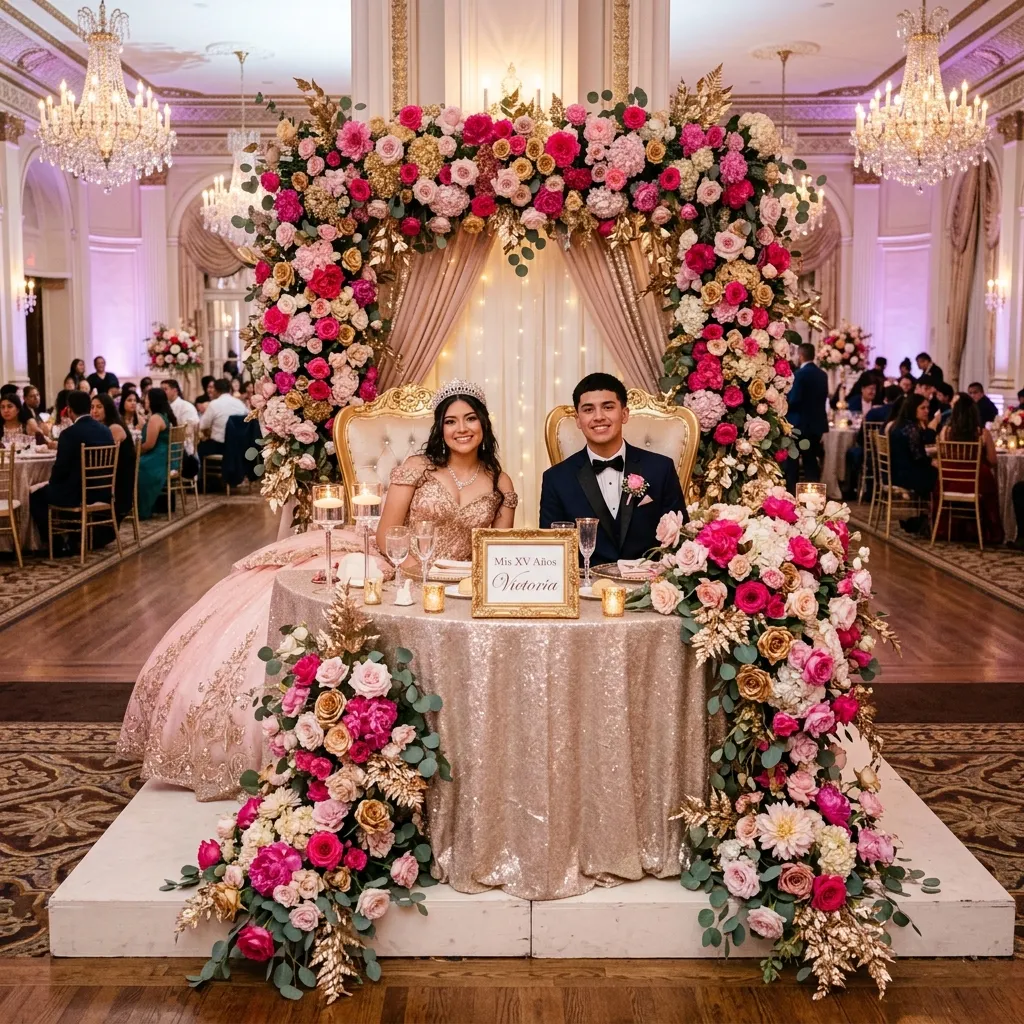
This masterclass explores quinceañera flowers and celebration styling from every angle: the symbolic role of blooms, the planning process, color and theme selection, ceremony florals, reception styling, bouquet design, court coordination, photo considerations, budget strategy, seasonal flower choices, and practical tips for creating a cohesive experience. Whether you are planning a grand ballroom celebration, a garden-inspired quinceañera, a modern luxury event, or a traditional cultural gathering, the right floral strategy can transform the entire occasion.
Understanding the Role of Flowers in a Quinceañera
Flowers are not simply decorative accents. In quinceañera design, they serve multiple purposes at once: they honor tradition, create visual harmony, soften architecture, reinforce the chosen theme, and elevate the emotional experience of the day. They are often the thread that ties together the dress, décor, table settings, ceremony backdrop, escort court, and photography style.
Because a quinceañera includes so many visual moments, floral design must be considered as part of the overall storytelling. A successful floral plan does not look random or crowded. It feels intentional, balanced, and expressive. Every bouquet, centerpiece, and altar arrangement should support the same message: this is a meaningful celebration of beauty, family, and coming of age.
Flowers as Symbols of Growth and Beauty
Many families choose flowers that carry symbolic meaning. Roses can represent love and admiration, lilies may suggest purity and grace, orchids often convey sophistication and exotic beauty, and baby’s breath can add a sense of innocence and softness. Even when symbolism is not the primary focus, floral choices often reflect the quinceañera’s personality and style.
Designers frequently use blooms to create a visual metaphor for the event. Soft pastel flowers can communicate sweetness and femininity. Rich jewel-toned arrangements suggest drama, confidence, and celebration. Bold tropical florals can reflect vibrancy and cultural pride. A carefully chosen floral palette helps bring emotional depth to the event.
Starting with the Quinceañera Vision
The most successful floral and styling plans begin with a clear vision. Before selecting flowers, it is essential to define the mood, aesthetic, and scale of the celebration. A quinceañera can be classic and regal, modern and glamorous, romantic and whimsical, or culturally traditional with contemporary refinement.
Begin by asking a few core questions: What feeling should the event create? What colors does the quinceañera love? Is the venue elegant and formal or bright and open-air? Is the focus on grandeur, intimacy, or balance between the two? Answers to these questions will guide every floral decision.
Choosing a Theme That Works with Flowers
Themes can be broad or highly specific. Some families prefer timeless approaches such as “princess,” “enchanted garden,” or “royal elegance.” Others choose more modern themes like “black and gold luxury,” “blush and champagne romance,” “winter wonderland,” or “tropical fiesta.”
Regardless of the theme, flowers should feel like a natural extension of it. For example, an enchanted garden theme may call for lush greenery, roses, ranunculus, and hydrangea with layered textures. A luxury ballroom theme may feature dramatic orchids, calla lilies, tall arrangements, and metallic accents. A tropical theme may use anthurium, birds of paradise, ginger flowers, and palm leaves.
How to Build a Quinceañera Floral Color Palette
Color is one of the most powerful tools in celebration styling. It influences emotion, photographs, and the cohesiveness of the entire design. The floral palette should harmonize with the dress, invitations, linens, lighting, and venue décor. A thoughtful color story prevents the event from feeling visually disconnected.
Matching Flowers to the Dress
The quinceañera dress is often the centerpiece of the event, so floral design should complement it rather than compete with it. If the dress is highly detailed, floral arrangements may need to be simpler to avoid visual overload. If the dress is sleek and minimal, flowers can bring in more texture and drama.
For dresses in classic colors like white, blush, ivory, champagne, or pastel tones, florals can either stay within the same family for a soft romantic effect or provide contrast with richer accent shades. For bold dresses such as red, royal blue, emerald, lavender, or fuchsia, flowers should be selected carefully to ensure the palette feels intentional and balanced.
Popular Quinceañera Color Combinations
- Blush, ivory, and gold: Soft, timeless, elegant, and ideal for romantic styling.
- White, silver, and blue: Clean, regal, and sophisticated.
- Lavender and champagne: Dreamy, youthful, and delicate.
- Red, gold, and greenery: Dramatic, bold, and luxurious.
- Pink, coral, and peach: Fresh, feminine, and celebratory.
- Black, white, and gold: High-contrast and formal, with modern glamour.
- Emerald, cream, and metallic accents: Rich, elegant, and refined.
A floral designer can expand these color stories across centerpieces, ceremonial florals, entrance arrangements, cake flowers, bouquets, and reception décor for maximum impact.
Essential Quinceañera Floral Elements
Quinceañera flower design is more than just centerpieces. There are multiple floral moments throughout the event, and each one has a distinct function. Understanding these components helps families plan a cohesive floral program rather than a collection of unrelated pieces.
The Quinceañera Bouquet
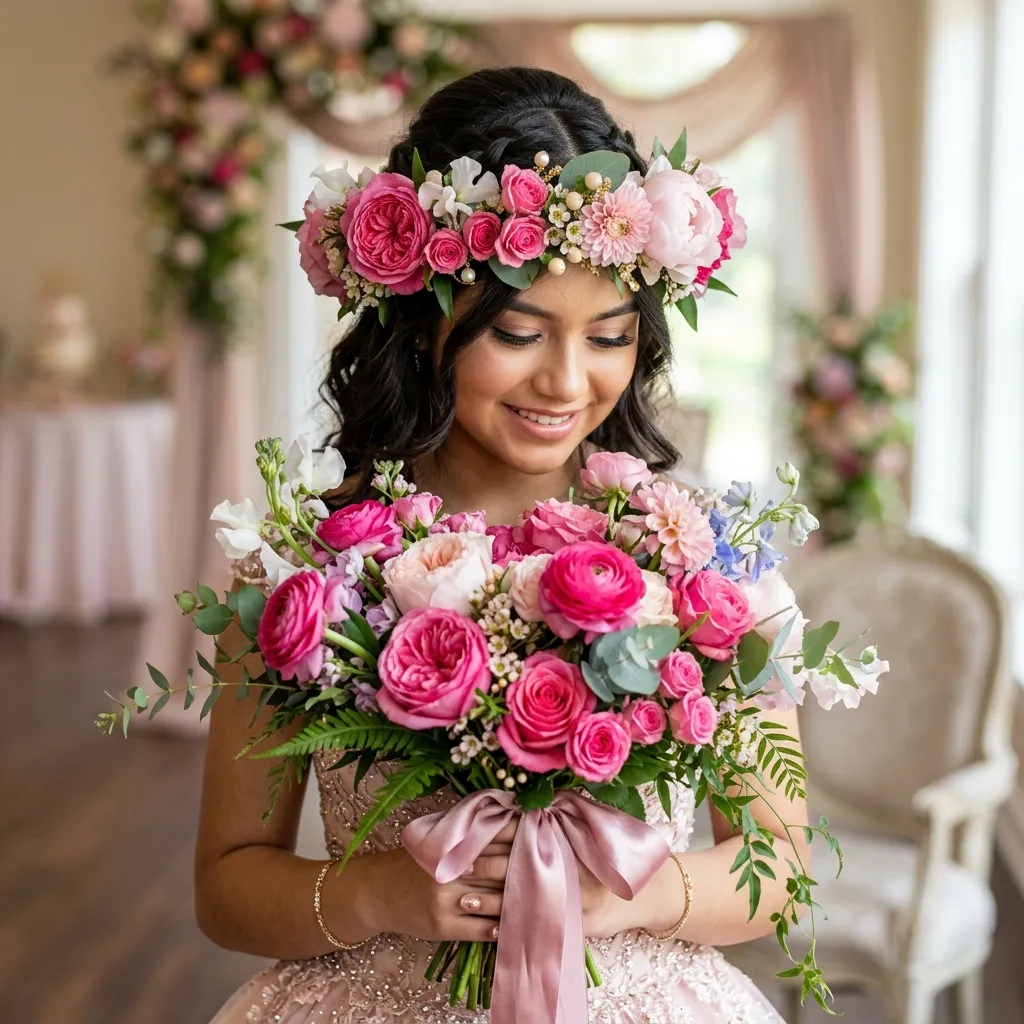
The bouquet is one of the most personal floral elements of the celebration. It accompanies the quinceañera during the ceremony, portraits, and often part of the reception entrance. It should be comfortable to hold, visually striking, and aligned with the overall style.
Common bouquet styles include rounded hand-tied bouquets, cascading designs, compact posy bouquets, and dramatic statement pieces. Roses, peonies, orchids, ranunculus, hydrangea, lisianthus, and calla lilies are frequent choices. The bouquet should also consider practical details such as weight, stem length, and durability for a long event day.
The Ceremony Altar or Backdrop Florals
The ceremony space often creates the most emotional photographs, making it one of the most important floral investments. Whether the event is held in a church, ballroom, garden, or private venue, the focal point should frame the quinceañera beautifully without overpowering the setting.
Popular ceremony floral pieces include altar arrangements, floral arches, pedestals, aisle markers, floral columns, and ground arrangements. These can be designed symmetrically for formal elegance or asymmetrically for a more modern, editorial feel. The key is scale: the florals should be large enough to photograph well and establish a sense of occasion.
Entrance and Welcome Florals
The first impression matters. Entrance arrangements, welcome tables, floral easels, and doorway installations create anticipation before guests even reach the main event space. These flowers set the tone and communicate the theme immediately.
For a luxurious effect, consider statement urns, cascading arrangements, or floral runners on welcome tables. For a softer look, use clusters of blooms with candles, greenery, and framed signage. Entry florals are especially important in venues with long hallways, grand lobbies, or open-air arrivals where guests transition from one atmosphere to another.
Reception Centerpieces
Centerpieces shape the guest experience during the meal and throughout the evening. They must look beautiful from all angles, allow conversation across the table, and work within the room layout. Depending on the event style, centerpieces may be low and lush, elevated and dramatic, or a mix of both.
Low arrangements often encourage intimacy and work well for round tables. Tall designs create grandeur and visual rhythm in large spaces. Mixed-height centerpieces add movement and help define different areas within a ballroom. To maintain cohesion, florals should repeat key colors and textures from the bouquet and ceremony designs.
The Court of Honor Flowers
The court of honor, often composed of chambelanes and damas, also plays a significant role in the visual presentation. Coordinated floral accessories such as wrist corsages, boutonnières, bouquets, or lapel accents can tie the group into the overall theme.
Consistency matters here. If the quinceañera’s bouquet is soft and romantic, the court florals should feel equally refined. If the event is bold and dramatic, the court accessories can incorporate richer tones or stronger structural blooms. Even subtle floral details can help the entire group appear polished and unified in photographs.
Cake Florals
The cake is both a dessert and a design object, especially in formal quinceañeras. Floral accents can elevate a simple cake into a true centerpiece. Fresh flowers on the cake should be food-safe, carefully placed, and selected for freshness and visual balance.
Cake flowers can be minimal and elegant, such as a few roses or orchids on one tier, or more elaborate with cascading blooms and greenery. The floral treatment should complement the cake design, not bury it. A good rule is to let the cake and flowers enhance one another.
Choosing the Right Flowers for the Season
Seasonality is one of the most practical and effective ways to improve both the beauty and efficiency of floral design. Seasonal blooms are typically fresher, more readily available, and often more budget-friendly than out-of-season flowers. They also tend to feel naturally aligned with the time of year.
Spring Quinceañera Flowers
Spring is ideal for romantic, fresh designs. Popular spring flowers include peonies, tulips, ranunculus, sweet peas, hydrangea, stock, roses, and lilac. The color palette often leans toward soft pastels, airy whites, and gentle greens. Spring styling works especially well for garden, floral fantasy, or feminine luxury themes.
Summer Quinceañera Flowers
Summer events can embrace vibrant colors and full, lush blooms. Roses, sunflowers, dahlias, orchids, zinnias, and tropical flowers are popular choices. Summer styling often includes stronger saturation, more greenery, and energetic combinations of coral, fuchsia, yellow, orange, and bright white.
Fall Quinceañera Flowers
Fall offers the opportunity for richness and warmth. Think burgundy roses, chrysanthemums, dahlias, calla lilies, ranunculus, and textural greenery. Deep red, rust, amber, plum, and gold palettes look especially striking in autumn celebrations. Candles and moody lighting also pair beautifully with fall florals.
Winter Quinceañera Flowers
Winter events often feature elegant, dramatic, or snow-inspired designs. White roses, orchids, anemones, amaryllis, evergreens, and silver-toned foliage can create a luxurious winter atmosphere. Cool-toned palettes with white, icy blue, silver, and blush are especially effective. Winter flowers should be selected with temperature sensitivity in mind if the event includes outdoor elements.
Floral Styling by Quinceañera Theme
Theme-driven styling is where floral design becomes truly memorable. A theme gives direction to every visual choice, from the bouquet to the linens to the lighting. When flowers are aligned with the theme, the event feels immersive and well curated.
Classic and Traditional Quinceañera Styling
Traditional quinceañeras often feature timeless florals such as roses, lilies, carnations, hydrangea, and baby’s breath. These can be arranged in elegant, symmetrical compositions with classic color palettes like white, blush, red, or gold. Formality, balance, and refinement are usually the design priorities.
Modern Luxury Styling
Modern luxury styling emphasizes clean lines, premium blooms, and sophisticated details. Orchids, calla lilies, peonies, garden roses, and sculptural greenery are ideal. Metallic accents, crystal details, candlelight, and monochromatic or two-tone palettes help create a high-end aesthetic.
Garden and Romantic Styling
For a romantic garden feel, embrace softness, layers, and natural movement. Flowers such as ranunculus, garden roses, peonies, lisianthus, and hydrangea work well, often paired with loose greenery and organic shapes. This style is ideal for outdoor venues, greenhouse settings, and whimsical indoor spaces.
Tropical and Vibrant Styling
Tropical quinceañeras allow for bold structure and lively colors. Birds of paradise, orchids, anthurium, heliconia, ginger, and palm foliage create unmistakable energy. Bright pinks, oranges, corals, greens, and yellows often define the palette. This styling is ideal for celebrants who want an unforgettable, festive atmosphere.
Fairy Tale and Princess Styling
Princess-inspired quinceañeras often rely on soft, luxurious florals with a magical sense of abundance. Roses, peonies, hydrangea, baby’s breath, and crystals can be combined with draping, twinkle lights, and layered fabrics. Pale pink, lavender, ivory, and champagne are common color choices for this dreamy aesthetic.
How to Design a Cohesive Floral Story
The best quinceañera designs feel like every floral element belongs to the same family. That does not mean every arrangement must be identical. It means that the flowers should share common visual cues such as color, shape, texture, and mood.
Start by selecting a primary bloom, one or two supporting flowers, and a foliage direction. Then define how these will appear in different parts of the event. For example, a centerpiece may feature the same roses as the bouquet but in a looser arrangement. The ceremony backdrop might amplify the same palette with added height and greenery. The cake may incorporate a few of the same blooms in a simplified composition.
Consistency also extends to non-floral styling elements. Linens, charger plates, candles, signage, stage décor, chair covers, draping, and lighting should all reinforce the same visual language. This is what creates a polished, high-end result.
Table Styling and Reception Atmosphere
Reception styling is where guests spend the majority of their time, so it must balance beauty with functionality. Floral design should support conversation, photography, food service, and movement through the room.
Centerpiece Height and Guest Comfort
Low arrangements are ideal when tables are intended for social interaction. They keep sightlines open and create a welcoming, intimate feel. Tall arrangements provide drama and presence but should be designed carefully so they do not block views or appear top-heavy.
Many event designers use a combination of heights to create visual variety. For instance, alternating low and tall arrangements across the room can help define zones and keep the space dynamic. Mirrors, candles, and smaller floral clusters can also be used to fill in gaps without overwhelming the tables.
Table Linens, Candles, and Accent Décor
Flowers do not exist alone. The best table styling integrates floral work with surrounding design elements. Linens establish the base mood; candles add warmth and elegance; runners can connect multiple arrangements; and glassware or metallic accents can amplify the palette.
If the floral design is dense and colorful, simpler linens may help prevent visual clutter. If the flowers are understated, richer table textures can create depth. The relationship between flowers and surrounding décor should always feel balanced and deliberate.
Photography and Floral Impact
Quinceañera flowers must look beautiful not only in person but also in photographs and video. Since this event is documented extensively, floral design should be planned with camera angles, backdrop composition, and lighting in mind.
Flowers That Photograph Well
Some flowers naturally translate especially well on camera. Roses, peonies, orchids, hydrangea, calla lilies, ranunculus, and dahlias are all strong visual performers because they retain shape and color well under different lighting conditions. Texture is also important. A mix of soft, structured, and airy flowers creates depth in photos.
Large-scale arrangements often read better in images than small ones because they hold their form and fill the frame. That said, even small arrangements can look elegant if placed thoughtfully and styled with purpose.
Creating Instagram-Worthy Moments
Modern quinceañera styling often includes intentional photo moments such as floral walls, statement arches, decorated chairs, staircase arrangements, and dramatic dessert displays. These are not merely trendy additions; they also provide anchors for portraits and social media sharing.
When designing for photography, consider the background behind each focal area. A beautiful floral arrangement can lose impact if placed against a cluttered or visually distracting space. Backdrops should frame the subject cleanly and support the floral story.
Budgeting for Quinceañera Flowers
Flowers are often one of the most significant décor investments in a quinceañera, so budgeting wisely is crucial. A thoughtful budget does not mean sacrificing beauty. It means allocating resources where they matter most.
Where to Invest More
Prioritize the elements that have the strongest visual and emotional impact: the bouquet, ceremony focal point, reception centerpieces, entrance décor, and main photo opportunities. These areas are seen most by guests and appear most often in memories and photographs.
Where to Simplify
If necessary, simplify smaller or less visible pieces such as secondary table accents, bathroom florals, or low-priority decorative areas. Repeating smaller arrangements from one area to another can also stretch the budget without compromising style. Using seasonal blooms and premium greenery strategically can reduce costs while preserving a luxurious appearance.
Smart Floral Budget Tips
- Choose flowers that are in season and locally available.
- Use a signature bloom throughout the event for cohesion and efficiency.
- Combine high-impact florals with candles, draping, and lighting for fullness.
- Reuse ceremony florals at the reception whenever logistics allow.
- Focus on the most photographed areas first.
Working with a Florist for a Quinceañera
Professional floral design is one of the best investments in a quinceañera because it helps turn ideas into a functional, beautiful reality. A skilled florist understands scale, color balance, mechanics, seasonal availability, and event timing.
What to Bring to the Consultation
Before meeting with a florist, gather inspiration images, dress photos, venue details, color preferences, and information about the court attire and ceremony schedule. The more complete the picture, the better the florist can create a design that aligns with the event vision.
It is also helpful to share practical constraints early, including budget, setup time, venue rules, and whether the event is indoors or outdoors. These details affect flower selection and design structure.
Questions to Ask Your Florist
- Which flowers will best fit our theme and budget?
- How can we reuse florals between the ceremony and reception?
- What design elements will photograph best?
- How will the flowers hold up in our venue conditions?
- Can you create a cohesive design across bouquet, centerpieces, and backdrop?
A good florist should act as both designer and advisor, helping refine the vision into something elegant, realistic, and deeply personal.
Common Quinceañera Floral Mistakes to Avoid
Even beautiful flowers can fall short if the overall strategy is not thoughtful. Avoiding common mistakes can save stress, time, and money while significantly improving the final result.
Choosing Too Many Competing Colors
One of the most frequent issues is an overly complex palette. While variety can be beautiful, too many colors can create visual confusion. A tighter palette generally results in more sophistication and cohesion.
Ignoring Venue Scale
Flowers should suit the size and architecture of the venue. Small arrangements can disappear in a grand ballroom, while overly large pieces can overwhelm a smaller hall. Proper scale is essential for impact.
Overcrowding Tables
Centerpieces should enhance the guest experience, not obstruct it. Overly dense arrangements can interfere with conversation, food placement, and the overall comfort of the table setting.
Forgetting About Logistics
Fresh florals need delivery timing, hydration, storage, and handling. If the event spans several hours or includes outdoor moments, flower durability becomes especially important. Logistics should always be part of the design plan.
Preserving Flowers After the Celebration
Many families want to preserve part of the quinceañera memory through flowers. The bouquet can be dried, pressed, or professionally preserved. Select blooms from centerpieces or the ceremony may also be saved if handled carefully.
Preservation allows the quinceañera to keep a meaningful keepsake from the celebration. If this is important, communicate it to the florist in advance so specific flowers can be prepared for that purpose.
Creating a Memorable and Meaningful Quinceañera Experience
At its best, quinceañera floral design does much more than decorate a room. It helps tell a story. It honors family tradition, celebrates the guest of honor, and transforms a milestone into an unforgettable visual experience. The flowers become part of the emotion of the day: the anticipation, the ceremony, the photo moments, the first dance, and the joyful gathering of loved ones.
When planning the flowers and styling for a quinceañera, the goal should always be harmony. Harmony between the dress and the bouquet. Harmony between the theme and the décor. Harmony between the ceremony and the reception. Harmony between beauty and practicality. When these elements align, the entire celebration feels elevated and unforgettable.
Final Thoughts on Quinceañera Flowers and Celebration Styling
The definitive approach to quinceañera flowers begins with intention. Every bloom, color, and decorative element should support the story you want the celebration to tell. By considering symbolism, seasonality, theme, venue scale, photography, and budget, families can create an event that is both breathtaking and deeply personal.
Whether the vision is classic, romantic, modern, bold, or lavish, the right floral styling has the power to transform a quinceañera into a timeless memory. Thoughtful design ensures that the celebration is not only beautiful on the day itself, but also cherished in every photograph and recollection for years to come.
For families planning a quinceañera with elegance and heart, flowers are never just an accessory. They are a signature of the celebration’s spirit, and when chosen with care, they become one of the most unforgettable parts of the day.
Frequently Asked Questions
Direct answers regarding flower delivery, custom ordering, and arrangements in the San Fernando Valley.
How far in advance should quinceañera flowers be booked? ▾
Ideally, book your quinceañera florist 6 to 9 months in advance, especially if your date falls during prom, wedding, or holiday season. This gives time to secure premium blooms, refine the color story, and coordinate with the venue and planner.
What flowers work best for a quinceañera? ▾
The best flowers depend on the dress, season, and style of the celebration, but roses, spray roses, hydrangeas, orchids, carnations, lisianthus, and peonies are popular choices. A skilled florist will balance beauty, durability, and budget while matching the overall theme.
How can I make quinceañera flowers look luxurious on a budget? ▾
Focus spending on high-visibility areas like the entrance, main table, and ceremony focal point, then use lush greenery, repeated color accents, and smart flower substitutions in secondary pieces. Consistent styling and thoughtful placement often create a more luxurious effect than simply increasing flower count.
Request a Custom Order or Quote
Planning an event or looking for fresh bouquets? Tell us your vision and our Mission Hills floral designers will contact you with options & pricing.