Masterclass in White Flower Arrangements for Timeless, Elegant Interiors
Flowers El Ranchito Expert Advice
Masterclass in White Flower Arrangements for Timeless, Elegant Interiors
White flower arrangements have a rare ability to transform a room with quiet authority. They do not compete for attention the way saturated hues sometimes do; instead, they refine the atmosphere, sharpen the visual composition of an interior, and create a sense of calm luxury that feels both current and enduring. Whether the setting is a formal dining room, a serene bedroom, a grand entryway, or a modern office, white florals deliver versatility that few other design elements can match.
For designers, decorators, hosts, and homeowners alike, mastering white flower arrangements is not simply about choosing blossoms of a pale color. It is about understanding tone, texture, scale, balance, vessel selection, placement, and the architectural language of a space. A white arrangement can be crisp and sculptural, soft and romantic, minimal and airy, or lush and opulent. The difference lies in how each element is composed.
This definitive guide explores white flower arrangements from every angle, offering practical design strategies, flower selection guidance, styling principles, and maintenance insight for interiors that aspire to look elegant, timeless, and beautifully curated. If you want your floral styling to feel polished rather than predictable, refined rather than fussy, and sophisticated rather than sterile, this masterclass will provide the framework you need.
Why White Flowers Remain the Gold Standard of Elegant Interior Design
White flowers are perennial favorites in interior design because they work across styles, seasons, and settings. Their appeal is rooted in several qualities that make them especially effective in curated interiors.
They complement nearly every palette
White is a natural harmonizer. In a room filled with warm neutrals, it adds freshness and light. In a monochromatic space, it introduces texture and depth without disrupting cohesion. In colorful interiors, it becomes the visual rest point that keeps the design from feeling busy.
They create a feeling of spaciousness
Because white reflects light, flower arrangements in white can make a room feel brighter and more open. This effect is particularly useful in smaller rooms, darker spaces, and interiors with minimal natural light.
They evoke timeless elegance
White flowers are associated with purity, refinement, and occasion-worthy beauty. From classic roses and hydrangeas to orchids and peonies, white blooms have long been used in formal décor because they signal restraint, care, and sophistication.
They adapt to every style language
White arrangements can read traditional, modern, rustic, coastal, or minimalist depending on the vessel and styling choices. This flexibility makes them one of the most valuable tools in interior floral design.
The Design Psychology of White Floral Arrangements
To use white flowers effectively, it helps to understand the emotional and visual effect they produce. White is more than a color; in interior styling, it is a design signal.
White communicates calm and order
Rooms anchored by white arrangements often feel more composed. The eye reads white as clean and balanced, which can help soften visual noise in a busy interior.
White suggests luxury without excess
Unlike overly elaborate palettes, white florals often communicate elegance through understatement. They can make a room feel expensive, even when the arrangement itself is relatively simple, because the impact comes from proportion, freshness, and placement.
White enhances architectural features
White arrangements can draw attention to a fireplace mantel, dining table, console table, or built-in shelving without overpowering the surrounding architecture. Their subtlety allows structural details to remain visible.
White can feel romantic or modern depending on execution
Soft, ruffled blooms in a rounded arrangement feel romantic and classic. Long-stemmed orchids or calla lilies in a clean-lined vessel create a sharper, more modern mood. This duality is one reason white florals are so enduring.
Understanding the Best White Flowers for Interior Arrangements
Not all white flowers behave the same way in arrangements. Some are lush and voluminous, others are linear and architectural, and some offer fragrance that contributes to the overall sensory experience of the room. Selecting the right blooms begins with understanding their shape, lifespan, and visual role.
White roses
White roses are a classic choice for elegant interiors. Their layered petals create softness and sophistication, and they work especially well in traditional, romantic, or transitional spaces. Garden roses in white often feel fuller and more luxurious than standard roses.
White hydrangeas
Hydrangeas offer volume and a cloud-like texture that fills large vessels beautifully. They are excellent for making an arrangement feel abundant with minimal complexity. Their rounded form suits entryways, dining rooms, and console tables.
White peonies
Peonies are beloved for their lush, generous blooms. When in season, they deliver exceptional softness and movement. Their romantic character makes them ideal for bedrooms, dressing rooms, and intimate entertaining spaces.
White orchids
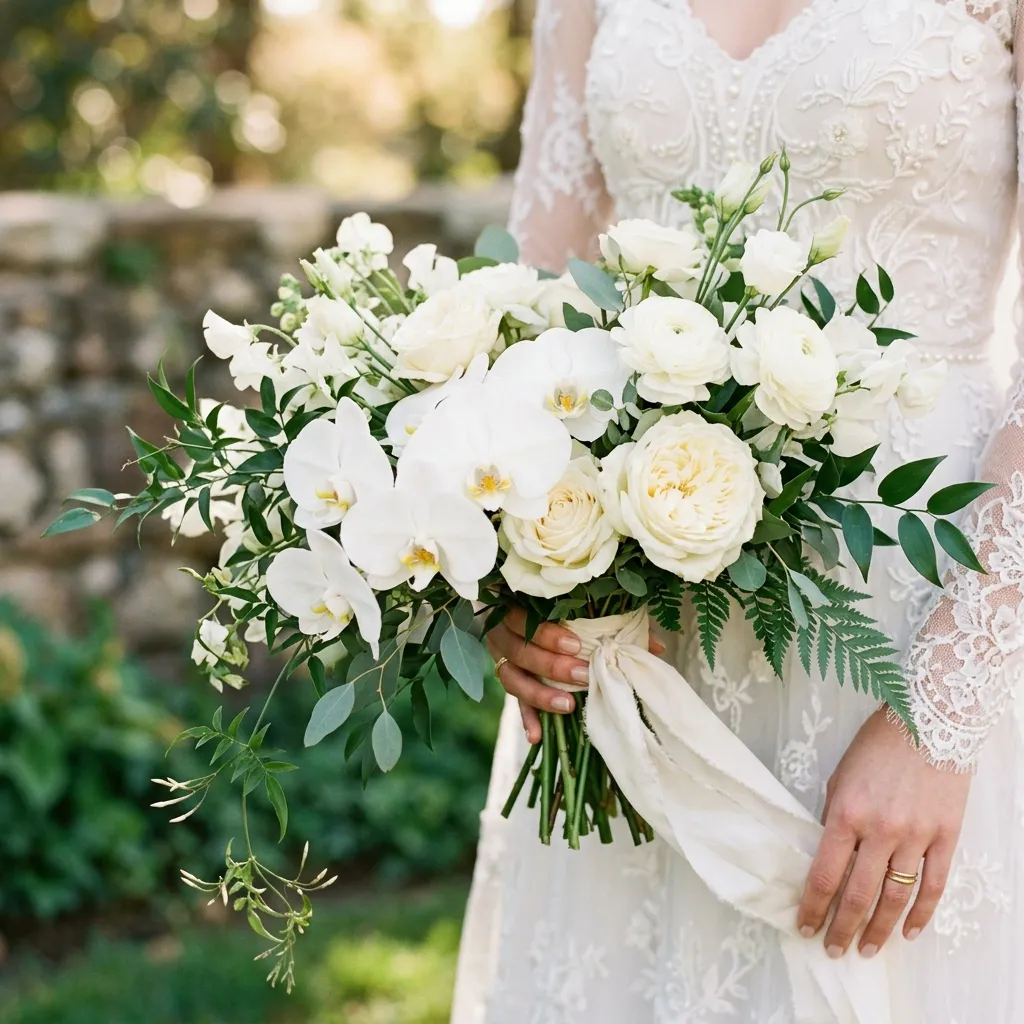
Orchids bring sleek elegance and a more contemporary profile. Their sculptural stems are excellent for modern interiors and minimalist compositions. Phalaenopsis orchids, in particular, make striking statement arrangements in tall or low-profile vessels.
White lilies
Lilies have presence, fragrance, and a formal quality that suits grand interiors. Their open blooms can add drama, though they should be used thoughtfully in enclosed spaces because of their powerful scent.
White tulips
Tulips bring freshness, movement, and simplicity. Their graceful stems and clean forms make them ideal for casual elegance and transitional styling. They are especially effective in spring interiors.
White ranunculus
Ranunculus offer delicate layers and an almost paper-like intricacy. They are highly desirable for arrangements that need softness without visual heaviness.
White calla lilies
Calla lilies are refined, linear, and sculptural. They work beautifully in contemporary spaces and are particularly effective when a strong vertical line or graceful curve is needed.
White carnations and spray carnations
Often underestimated, carnations can be highly useful in white arrangements because of their longevity, affordability, and ability to add fullness. When styled well, they can look fresh and elegant rather than conventional.
White stock, delphinium, and snapdragons
These flowers contribute height, texture, and movement. They are especially useful in layered arrangements where structure and lift are important.
Choosing the Right White Flowers for Different Interior Styles
The best arrangement is not just beautiful on its own; it is appropriate to the room it inhabits. White flowers should feel integrated into the interior design language rather than inserted as an afterthought.
For minimalist interiors
Choose a small number of highly sculptural stems, such as orchids, calla lilies, or tulips. Simplicity is key. Use vessels with clean lines and avoid overfilling the arrangement.
For traditional interiors
Opt for white roses, peonies, hydrangeas, and lilies. Fuller silhouettes and classic urns or pedestal vases reinforce the refined, timeless mood.
For modern interiors
Focus on asymmetry, negative space, and architectural shape. White anthuriums, orchids, calla lilies, or a sparse collection of tulips can feel especially appropriate. Matte ceramic, glass, or metal vessels often work best.
For coastal interiors
White flowers paired with airy greens, sandy neutrals, and glass or weathered ceramic containers create a breezy, open feeling. Hydrangeas, tulips, and roses are particularly effective.
For romantic interiors
Use lush blooms like peonies, garden roses, ranunculus, and stock. Choose rounded, soft arrangements in delicate porcelain or antique-inspired vessels.
For organic, natural interiors
Look for white flowers with visible stems, textured petals, or a slightly wild form. Add branches, grasses, or airy fillers to maintain a natural, collected-over-time aesthetic.
Essential Principles of White Flower Arrangement Design
Beautiful floral design depends on more than bloom selection. The arrangement must feel intentional in shape, scale, and texture. White flowers are particularly sensitive to poor design because their simplicity reveals every imbalance.
1. Prioritize shape before detail
Begin with the overall silhouette. Decide whether the arrangement should be rounded, vertical, asymmetrical, airy, or cascading. Once the structure is established, detail can be refined.
2. Use texture to create depth
Because white can appear flat if handled carelessly, texture becomes essential. Mix velvety petals with glossy leaves, layered blooms with smooth ones, or delicate flowers with structured stems.
3. Pay attention to scale
A small arrangement in an oversized vase can feel lost. A massive bouquet on a delicate table can overwhelm the room. White florals should be proportionate to both the surface and the surrounding furniture.
4. Mind the negative space
White arrangements benefit from breathing room. Leaving space between stems, blooms, or the arrangement and surrounding objects allows the eye to appreciate each component.
5. Avoid monotony
Even when using all white flowers, the composition should include variation in bloom size, shape, and texture. The most successful white arrangements are never visually flat.
How to Choose the Right Vessel for White Flower Arrangements
The container is as important as the flowers themselves. In white floral styling, the vessel can subtly define the entire aesthetic direction.
Clear glass vases
Glass vases are versatile and modern. They let stems become part of the composition, which is especially elegant with tulips, orchids, or long-stemmed roses. They work well in contemporary and transitional interiors.
White ceramic vessels
White-on-white styling creates a serene, cohesive effect. Ceramics introduce softness and craft while allowing the flowers to remain the visual focus. This pairing is ideal for minimalist and Scandinavian-inspired spaces.
Stoneware and matte vessels
Stoneware adds tactile depth and an organic quality. It is excellent for interiors that favor natural materials, muted palettes, and understated luxury.
Metallic containers
Brass, silver, or antique gold vessels can elevate white blooms and introduce a formal or festive note. Use them sparingly to avoid visual competition unless the goal is a more dramatic display.
Classic urns and pedestal vases
These are ideal for formal interiors and larger arrangements. Their traditional shapes reinforce the timeless quality of white flowers and work beautifully in entryways or dining rooms.
Low bowls and compotes
Low vessels encourage wide, lush compositions that are excellent for dining tables and coffee tables. They keep sightlines open while still delivering impact.
Styling White Flowers by Room
White flower arrangements should be tailored to the purpose and traffic flow of each interior space. A design that works beautifully on a dining table may not be suitable for a bedside table or bathroom counter.
Entryway styling
The entryway is your room’s first impression, making it an ideal location for a striking white arrangement. Consider tall hydrangeas, roses, orchids, or lilies in a substantial vase. The goal is to create a sense of welcome and polish.
Living room styling
In living rooms, arrangements should complement the scale of furniture. A large arrangement on a coffee table should remain low enough to allow conversation. Side tables and consoles can hold taller compositions that add height and elegance.
Dining room styling
Dining rooms benefit from arrangements that feel generous but do not obstruct eye contact across the table. Low bowls of peonies, roses, tulips, or ranunculus are often ideal. For larger dining rooms, a pair of symmetrical arrangements can create formal balance.
Bedroom styling
Bedrooms call for softness and calm. Choose delicate white blooms such as peonies, roses, or tulips in smaller arrangements. A single vase on a nightstand or dresser can introduce serenity without clutter.
Bathroom styling
Bathrooms often respond well to small, fresh arrangements. White orchids, roses, or a few stems of tulips can elevate the space and make it feel spa-like. Keep the scale modest to preserve a clean, uncluttered feeling.
Kitchen styling
In kitchens, white flowers should feel effortless and fresh. A casual ceramic pitcher filled with tulips or a small bunch of roses can soften hard surfaces and add warmth without appearing overly formal.
Office or study styling
White arrangements in offices should support focus and clarity. Orchids, calla lilies, or simple rose compositions can maintain a refined atmosphere while avoiding distraction.
Seasonal Strategies for White Floral Arrangements
White flowers can be used year-round, but the best arrangements reflect the season in texture, form, and supporting materials.
Spring
Spring invites tulips, peonies, ranunculus, sweet peas, and hyacinths. Arrangements can feel light, fresh, and slightly more relaxed. The key is to embrace movement and softness.
Summer
In summer, white hydrangeas, roses, lilies, and orchids can create a clean, cool effect. Pair them with airy greenery or pale branches for freshness.
Autumn
White flowers in autumn gain depth when paired with subdued textures such as olive branches, seeded eucalyptus, dried elements, or warm neutrals. The contrast of white against earthy materials feels sophisticated.
Winter
Winter is one of the most elegant seasons for white florals. Amaryllis, orchids, roses, and paperwhites create a luminous, refined mood. Paired with silver vessels, candlelight, or evergreen accents, white flowers become especially striking.
How to Build a White Flower Arrangement Like a Professional
Creating a polished arrangement requires a methodical approach. While flowers may appear spontaneous, professional results come from structure and restraint.
Step 1: Select your focal flowers
Choose one or two dominant blooms to anchor the design. These might be white roses, hydrangeas, peonies, or orchids depending on the desired style.
Step 2: Determine the silhouette
Before adding fillers, establish the shape. Do you want a rounded centerpiece, a loose and airy composition, a vertical arrangement, or a sculptural display? This decision guides every subsequent choice.
Step 3: Add supporting blooms
Introduce secondary flowers to increase depth and texture. For instance, roses may be paired with ranunculus and stock, or hydrangeas may be accented with tulips and small white spray blooms.
Step 4: Include greenery selectively
Greenery should enhance the white flowers, not dominate them. Use it sparingly if the goal is a pure white look, or more generously if you want a natural, garden-inspired effect. Soft greens such as eucalyptus, olive branches, or ruscus often work well.
Step 5: Refine spacing and balance
Step back and evaluate the arrangement from different angles. Make sure the composition looks intentional from every view, especially if it will be seen in the round.
Step 6: Finish with height and movement
A few stems extending beyond the main mass can keep the arrangement from feeling rigid. Small asymmetries often make the design feel more natural and expensive.
Best Greenery and Accents to Pair with White Flowers
Although some interiors call for all-white florals, subtle accents can deepen the arrangement and provide visual richness.
Eucalyptus
Eucalyptus adds softness and a muted silver-green tone that pairs elegantly with white blooms. Its airy structure is especially effective in casual-luxe interiors.
Olive branches
Olive branches contribute a refined, Mediterranean feel. They are ideal for spaces that favor warmth, natural materials, and understated sophistication.
Ruscus
Ruscus offers a clean, elegant leaf shape that blends easily into formal or modern designs.
Ferns
In the right context, ferns can create softness and movement, though they tend to read more romantic or botanical than strictly formal.
Branches and twigs
Minimal branch material can add height and sculptural interest, especially in winter or modern interiors.
Neutral accents
Subtle additions such as white berries, seed pods, or dried natural elements can enrich texture while keeping the palette restrained.
Common Mistakes to Avoid with White Flower Arrangements
White flowers are deceptively simple, which means mistakes stand out more clearly. Avoiding these issues will dramatically improve the quality of your arrangements.
Using only one type of bloom without texture
A mass of identical flowers can feel flat unless the arrangement has exceptional form. Mix flower types or vary bloom maturity for depth.
Choosing a vessel that is too small or too ornate
The wrong container can undermine even the most beautiful flowers. White arrangements often look best in vessels that feel quiet and purposeful.
Overcrowding the arrangement
Too many stems packed too tightly can make white flowers appear heavy instead of luminous. Give each bloom room to breathe.
Ignoring room proportions
A dramatic foyer arrangement may be perfect in a tall entryway but inappropriate for a narrow shelf. Scale must match context.
Letting aging blooms remain in the design
With white flowers, browning edges or wilting petals are particularly noticeable. Regular maintenance is essential.
How to Keep White Flower Arrangements Fresh Longer
Longevity matters, especially if the arrangement is intended to maintain a pristine appearance in a prominent interior space.
Use clean vessels
Always start with thoroughly cleaned vases to reduce bacterial growth, which can shorten flower life.
Trim stems properly
Cut stems at an angle before placing them in water. This improves water uptake and helps flowers stay fresh longer.
Refresh water frequently
White flowers benefit from clean water every one to two days, particularly in warm rooms or bright locations.
Remove fading blooms early
As individual flowers decline, remove them before they affect the appearance of the whole arrangement.
Keep arrangements away from heat and direct sun
Excess heat can accelerate wilting and discoloration. Position arrangements in cooler, stable areas whenever possible.
Use floral food appropriately
Commercial flower food can extend vase life, though it should be used according to instructions for best results.
White Flower Arrangements for Special Occasions and Everyday Interiors
One of the strengths of white florals is their ability to move effortlessly between formal occasions and daily life.
For entertaining
White flower arrangements elevate dinner parties, holiday meals, bridal events, and milestone celebrations with grace. They allow tableware, candles, and linens to shine while adding elegance to the setting.
For everyday use
In ordinary living spaces, white flowers bring a feeling of intentional care. A simple arrangement on a kitchen island or bedside table can make a home feel more finished and welcoming.
For gifting
White arrangements are widely appreciated because they suit many tastes and interiors. Their timeless quality makes them a reliable and sophisticated gift choice.
Advanced Styling Techniques for a Truly Elevated Look
Once the fundamentals are understood, there are advanced ways to make white arrangements feel more editorial and design-forward.
Layer monochromatic whites
Combine bright white, ivory, cream, and soft blush-white tones to create subtle variation. This technique adds dimension without breaking the palette.
Mix matte and glossy surfaces
Pair white petals with reflective glass, glazed ceramics, satin ribbons, or polished metal for a composition that feels rich and textural.
Introduce asymmetry
Symmetry is classic, but asymmetry often feels more contemporary and organic. A slightly off-center composition can create movement and sophistication.
Emphasize stem visibility
Especially in glass vessels, visible stems can become part of the artistry. Clean, intentional stem lines contribute to a gallery-like effect.
Use repetition sparingly
Repeating the same flower type in multiple rooms can create a cohesive design story, but vary vessel shape and arrangement style to avoid monotony.
When White Arrangements Need Warmth: Balancing Cool and Soft Elements
Pure white can sometimes feel stark if it is not balanced by surrounding materials. The most successful interiors use white flowers as part of a larger sensory composition.
Pair with warm woods
Walnut, oak, and other natural wood finishes add warmth to white arrangements and prevent them from feeling clinical.
Use textured fabrics nearby
Linen, boucle, wool, and cotton help soften the crispness of white florals. These materials create a layered, livable environment.
Incorporate candlelight
Soft candlelight warms white petals and enhances their elegance, especially in evening settings.
Balance with natural elements
Stone, ceramics, woven baskets, and branch accents can give white floral styling an inviting, human quality.
Final Thoughts: The Lasting Power of White Flowers in Elegant Interiors
White flower arrangements endure because they solve a design problem with rare grace. They brighten without shouting, refine without feeling excessive, and adapt without losing identity. In interiors that value timeless elegance, white florals are not simply decorative; they are foundational.
When thoughtfully composed, white arrangements can soften hard edges, elevate everyday rituals, and introduce a sense of serenity that feels deeply luxurious. The key is to think like a designer: consider bloom selection, vessel choice, placement, scale, texture, and atmosphere as interconnected parts of a single visual statement.
Whether you favor lush garden roses, sculptural orchids, airy tulips, or abundant hydrangeas, white flowers offer a powerful language of beauty that never goes out of style. They are as suitable for intimate homes as they are for grand interiors, as effective in modern spaces as in traditional rooms, and as relevant for everyday styling as for life’s most important celebrations.
For anyone seeking a floral approach that is elegant, adaptable, and enduring, mastering white flower arrangements is one of the most rewarding design skills you can develop. Done well, they do not merely decorate a room. They complete it.
Frequently Asked Questions
Direct answers regarding flower delivery, custom ordering, and arrangements in the San Fernando Valley.
How do I keep white flower arrangements from looking flat or plain? ▾
Use at least three layers of white—from bright white to ivory to cream—and mix petal textures, bloom sizes, and leaf shapes so the arrangement has depth and contrast without adding color.
Which white flowers last the longest indoors? ▾
Orchids, chrysanthemums, alstroemeria, carnations, lilies in bud, and many roses conditioned properly tend to last well indoors, though longevity depends on temperature, hydration, and placement away from heat and direct sun.
What vase colors work best with white flowers in elegant interiors? ▾
Clear glass, matte white ceramic, smoked glass, stone, and aged metal all work beautifully; the best choice depends on whether you want the arrangement to feel airy, modern, classic, or sculptural.
Request a Custom Order or Quote
Planning an event or looking for fresh bouquets? Tell us your vision and our Mission Hills floral designers will contact you with options & pricing.